Writing

On Pregnancy & Style

Maybe you know (and then, maybe you don't), I used to be pretty into fashion. I had a very specific style; I took outfit photos; I maintained a fashion blog. I was into it the way some people are into baking. I curated my wardrobe; I mixed and matched; I kept a notebook full of outfit ideas; I wrote down at least three outfit combinations before I bought a new item. I was dedicated. 

And then, one day, it stopped. At first, I stopped liking how I looked in outfit photos, but I kept dressing up everyday because I enjoyed it and I had the clothes. As time passed, my body changed and my carefully selected wardrobe started to not fit quite right. More time passed and everything fit even less. 

I ended up in a deep rut where my wardrobe made me deeply unhappy (but the thought of getting rid of anything literally felt painful). I put everything in boxes and replaced it with, essentially, sweaters, leggings, and flowy tops. I didn't feel stylish, but I felt I could at least come across as cute or passable most days. 

Then I got pregnant. 

Pregnancy makes you treat, and look at, your body in a completely different way. No longer is that pizza on a Friday night just sustaining you; a good portion of it is being siphoned into a tiny human being that is growing bones, a brain, and organs. No matter what you do, your body is going to change and it's going to be very obvious to other people (even if they don't know you're pregnant). 

I will never be one to be preachy about treating your body like a temple. Truly, your temple is what you chose it to be: that could mean it's a salad bar or it could mean it's a rave. Who knows? It's your body/temple/whatever. And I don't think pregnancy really changes that (except in the case of drinking and smoking). I will fully admit to demanding Taco Bell at least once a week, sometimes more. I will also fully admit that some days all I drink is Diet Pepsi (I'm so sorry about the aspartame, Forrest). To a certain extent, pregnancy is such a stressful time otherwise that to try and stop yourself from craving the things you want when you're ravenously hungry is just another building block of being miserable. No one likes the mean pregnant lady, that's for sure. 

All I'm saying is: being pregnant changes how you view your body, and yet, there is no stopping or changing it. No amount of salads or sweet potatoes or kale is going to stop your body shape from changing, your waist from thickening, your abdominal muscles from separating to accommodate your fancy, improved uterus. 

Since getting pregnant, I have thought a lot about clothes. From the very start, you know your body is going to undergo a monumental shift, but you don't really know how or when. The knowledge is there, but the important part is the details and that's what really matters. You try to prepare the best way you can. For me, this meant making a truly bizarre decision to try not to buy maternity clothes. This didn't work, obviously, because I'm wearing maternity pants right now

A little less than 3 weeks ago, all my shirts were suddenly tight in a place where they hadn't been before (that is, across the belly). My pants could no longer button (but, brilliantly, still fit everywhere else). Most important, I could wear my leggings, but the cutting in of the waistband was torture. I had to do something. 

I bought maternity jeans and maternity leggings. I bought a maternity dress. I bought a pair of somewhat dorky maternity cargo pants. I bought extra long tank tops at Target for summer.

The unifying factor of all of these decisions? I bought them, ultimately, out of desperation for something to wear that wasn't my uncomfortable leggings. I didn't buy them necessarily for max cuteness or because they fit my style. In fact, they really don't. 

But part of that desperation was the desire to look better. It's true: I could wear sweatpants and baggy t-shirts for 9 months and call it good (and considering my workplace, this is entirely possible). But I started to realize if I dressed nice everyday (maybe not stylish, maybe not perfectly) I would feel a lot better about the fact that I was slowly becoming more spherical. If nothing else, if I looked pulled together, I would feel less like people were judging me (because my baby bump only really looks like a baby bump if you know I'm pregnant). 

Personal style is a tricky subject to begin with. Some people have an effortless style that they fall into without having to do much work for it--there is no curation for them, no hours of trying on items. Some people are on the opposite spectrum, never quite achieving the look they want and never really knowing where to start. Pregnancy can make things more difficult, with different sizes and larger price tags, for both sides of that spectrum. 

I actually started a Pinterest board to give myself ideas when I feel like pulling a WFH and wearing my Batman onesie the whole day. (As an aside, I love the bloggers who start doing "How to Dress for Pregnancy!" pins at like 8 weeks with their perfectly flat stomachs. Just wait, guys. Just wait.)

Mostly though, while I work my way through pregnancy, I want to try to improve my self-image to be the best it can be--baby bump and all. 

Give Me All Your Breakfast Foods: Or, Why We Shouldn't Be Afraid to Try New Things

My mom would probably be the first to lament my hatred of breakfast as a child. I distinctly remember going through a phase where all I would eat was chocolate chip Costco muffins--but I only ate them 1) microwaved and 2) upside down. Oh and 3) I only ate the bottom half, never the top because the texture freaked me out. No, I don't know what was wrong with me.

I distinctly remember tipping the top parts of Costco muffins into the trashcan in my family's kitchen, the thunk of it against the garbage bag, then carrying my plate to the sink. What a waste. 

Other weird things I ate for breakfast included burnt toast (something I still have an affinity for) and mini-bagels microwaved with slices of American cheese inside (something I would still eat today if it didn't fill me with shame). I would eat pancakes, but only with butter, no syrup. I would eat scrambled eggs only in a sandwich with toast, never on their own. I didn't like bacon or sausage. I liked cinnamon rolls, but, like giant Costco muffins, that's not really a balanced breakfast. I ate Eggo waffles, but like pancakes, only with butter. I only liked dry cereal and usually only Cheerios or fruity, sugar-coated cereals--but I didn't like eating them for breakfast.

I was a breakfast weirdo, an anomaly in breakfast-obsessed America. In general, I just hated breakfast. I never felt hungry in the mornings and none of the food appealed to me. I went through most of middle school and high school never eating breakfast--not because I didn't have time, but usually because I didn't like any of the foods available to me. 

It wasn't until my sophomore year when I took a walking/jogging class in the accelerated 6-week term that I started eating breakfast consistently. This was also when I started to get really weird about logging, or writing down, everything I ate, a habit that continues to haunt me (I write, as a reminder on my phone chirps so I remember to log my lunch into LoseIt! so I can track my protein intake). After jogging a mile or more, I knew I had to eat breakfast or I would slowly transform into a werewolf throughout my Shakespearean literature class. Just kidding, but seriously: I would get cranky. 

While I recognized my need to eat breakfast, I still didn't necessarily like breakfast foods. At least, not until Danny came to live with me, exactly three years ago. 

Danny is a breakfast eater, especially on the weekends. When he moved in, I would make breakfasts on the weekends and that's when I started to enjoy them. 

I'm not sure when the switch happened. I can't exactly pinpoint when I started to appreciate pancakes or waffles or eggs-sans-toast, but it happened. Something just changed. I even started to like bacon and sausage. 

Being a lifelong picky eater, it's always weird how one day something you always hated becomes something you don't really mind. Like red onion: I've always avoided raw red onion, but six months ago, I ate a sandwich with raw red onion on it and... I didn't die. It tasted good. Why am I so difficult with food? 

I do remember the first day I tried a fried egg. I've never been a big egg eater--and to be completely honest, I don't like eating eggs plain, period--and I'd always rejected fried eggs. I'd learned to make them for Danny, but I never ate them myself. However, when I was between jobs last year, I convinced myself that trying new things would be good for me. So I ate a fried egg... and I loved it. 

Obvious statement alert: tastes change. Things I once thought were disgusting, I now love (and I'm sure being pregnant isn't helping this) and things I once loved, I now find revolting. When I was 14, I redecorated my room to feature orange and teal flowers (I loved orange obsessively at this age). The idea of having an orange and teal room these days sends me into a panic. How did I sleep with orange curtains, orange bedding, and teal accents? Just as my taste in decor has changed, so has my actual, literal taste. 

I think too often picky eaters (like myself) are terrified to try things that feature foods they've always disliked... even if they don't really remember why they started disliking that food. They (and not just "they", but "we" to include me) are afraid to simply try a new thing. All it took for me to start enjoying, and eating, breakfast was to try it, to try different foods, from fried eggs to bacon to pancakes with syrup. It sounds basic as all hell, but to the picky eater, it can be monumentally hard. 

You've probably clued into the fact, by now, that I'm not just talking about picky eaters needing to try new things. It's just the best metaphor available, because lots of people are picky eaters. Picky eaters often spend their time trying to figure out how to avoid the foods they don't like and are unwilling to try again. They're terrified of having a bad experience. 

But if I had been unwilling to try breakfast (waaaay back in June 2012) when Danny came to live with me, I would have never experienced the joy of lazy weekend breakfasts. And what kind of life would that be? 

All I'm saying is, trying something new every once and while, with no schedule or no motivation to change, can be a really, really positive thing. 

On Scrapbooking With Less

I love scrapbooking blogs. 

In fact, I would say they are one of my favorite niche blogs to read. Over the past six months, as I've moved away from fashion and beauty blogging, I've followed more and more scrapbooking and organizing blogs and Instagram accounts. Maybe it's the baby, or maybe it's that I'm returning to my first favorite hobby. But either way, I've gotten into scrapbooking again for the first time in a long time. 

However, there seems to be an overwhelming theme to most scrapbooking blogs (and organizing blogs, now that I think about it). What's that theme? Acquiring stuff

Funny enough, this is one of the things that made me a little, well, exhausted with fashion blogs and then beauty blogs. The constant acquiring of new things: new tops and skirts and shorts and dresses and belts and purses; new foundations, powders, blushes, bronzers, lipsticks, blushes, eyeshadows, palettes, and nail polishes. It gets exhausting to even think about keeping up with the rate at which some bloggers just seem to acquire. Some stuff might come from sponsors, but it still seems like the bulk of what bloggers write about is... stuff they bought with their hard earned cash. And if you add up the totals at the end of the day, the numbers aren't pretty. 

One beauty blogger that I follow spend about $500 in one week. In one week on random dupe purchases, multiples of products she already owned, and other random beauty supplies. She admitted in a video to owning over 50 bottles of lotion, but she'd still bought three new tubs of Body Shop body cream. She also admitted to owning an endless supply of lip scrubs and lip balms, but had bought five more of both in the same week. She just wanted to review them, she said, for us, her viewers and readers. But did she really? Or was the desire more for the product? 

There is nothing wrong with acquiring things. My thought is if you like something and use it, you should buy it. But I've started to get very wary (and this might be because I'm an adult with bills to pay, who simply can't afford to drop the equivalent of a mortgage payment on lotion that I already own) of bloggers that seem to just spend, spend, spend. Bloggers can definitely make good money from blogging--but they can't make that much money. 

It seems like a new way to showcase, and excuse, a shopping addiction. It also seems like a weird competition: who can review the newest thing first? Who can have the most products in the most pristine condition (because really when you have 20 different blushes, you can always photograph one looking pretty and new)? 

That's why I stopped reading a lot of beauty and fashion bloggers. 

I didn't expect to see the same kind of frivolous spending among scrapbooking bloggers, but I was wrong. At first, I didn't notice: as I scrolled through my Instagram feed, I ooohed and aaahed over the meticulously decorated and scrapped planners, the gorgeous Project Life pages, the books, the washi tape, the stickers. Then, I started to notice something. I started to keep count. 

A popular trend among scrapbooking blogs is planners. Yes, planners. Those pre-dated little books you can buy in a variety of shapes, sizes, orientations with different timelines and what have you. Super popular among scrapbookers. From Filofaxes to Erin Condren planners, some people do some amazing things with them. 

But as I started to do a counting experiment: in one Instagram account of one scrapbooking blogger, I counted 20 different planners. She owns 20 different planners... and scrapbooks in each. and. every. single. one. In her mind, each planners serves a different purpose: this one records her appointments; this one, she journals about her day (this is separate from her scrapbook journal and her visual journal and her Project Life scrapbook and... and...); this one, she uses just when she's camping; this one, for her kids; this one, to keep track of her expenses; this one, for another thing; this one, just because she likes it. It's exhausting. How can she keep up? I barely have time to write a paragraph in my journal!

That wasn't the end of it either: there seemed to be an endless list of things she'd bought "just to try." Scrapbooking subscription boxes. Piles of Midori folders. Different Filofaxes. Every single Project Life kit available. Sticker printers. Label makers. The Cricut machine. It wasn't just planners. It was everything. And then, finding different and creative ways to organize everything, which of course included buying more stuff: Ikea carts, Container store desks and shelves, and more.  

I had unwittingly stumbled into the same kind of niche as before: the niche of purchasing new. Instead of focusing on scrapbooking and showing the pieces of art you can create in the simple space of a journal or planner, bloggers instead get caught in the trap of having something new to show off, to demonstrate, to review.

The fun thing about scrapbooking is that you can use basically anything to do it: pictures, washi tape, notebook paper, Sharpies, pressed flowers, leaves. You don't need to buy 100 different kinds of stickers. You don't need 27 different rolls of washi tape. You don't need all this stuff. In trying to hard to document life, you spend so much time doing it that it almost feels like you don't have much of a life to document. The most fun part of scrapbooking is doing it after a long period of not being able to. Those weekends of binge scrapbooking are so fun and relaxing! 

And I felt like a lot of the blogs and Instagram accounts I had followed had lost that. They'd lost the simplicity and fun of scrapbooking from, well, scraps. That's why it's called scrapbooking! While I oohed and aahed over the pieces they created, something about them started to feel hollow. While they are creative and beautiful, they also seem a bit empty, a bit lacking. There is something overly processed about them, even though they're handmade. It's probably because I realize now that they aren't created just to create; they're created for the process of showing, of demonstrating, of reviewing another purchase. And that's a bit sad, isn't it? 

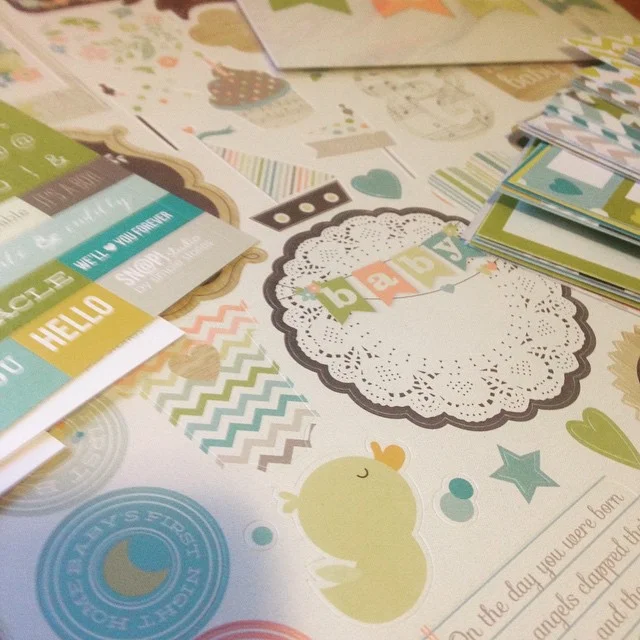
I love Project Life and Simple Stories packs. I love them because they reduce a lot of the stuff you need and you can easily mix and match pieces and cards. I don't feel the need to buy a bunch of new packs when I want to start a new project. I ordered $20 worth of new stuff for my baby scrapbook (only because I'd simply run out of things for it). I keep my scrapbooking hoard to a minimum (and I try to keep it minimally organized). I'm proud of my scrapbooking hobby and my abilities in it (it's one of the simplest art forms to get into), but I worry about falling into the trap of acquisition, the siren call of wanting to try the newest planner, the newest pens, the new stickers or buttons or whatever. 

I've set rules for myself. As much as I want to scrapbook in planners (because they do really look cool), something about that just seems to... time consuming. I only buy new pieces when I start a new album--and I only start a new album for a major life event. I have a scrapbook for my Disney vacation, my wedding, my honeymoon, the baby. I want to start a general (big) scrapbook for everyday bits and pieces: weekend trips, barbecues, documenting my pregnancy. Otherwise, I'll do a little scrapbooking in my journal, but nothing extreme, nothing too hardcore. I'll do listing challenges and make albums out of leftovers and bits and pieces. I won't go overboard. I won't order 30 different planners. 

Ultimately, this is a sign of the problems with niche blogging. Ultimately, the niches begin to revolve more and more around competition, over who has what and who has reviewed what (and who reviewed it first). It becomes about acquisition. It doesn't matter the niche. It seems to happen everywhere. But that doesn't mean you should give in to it. 

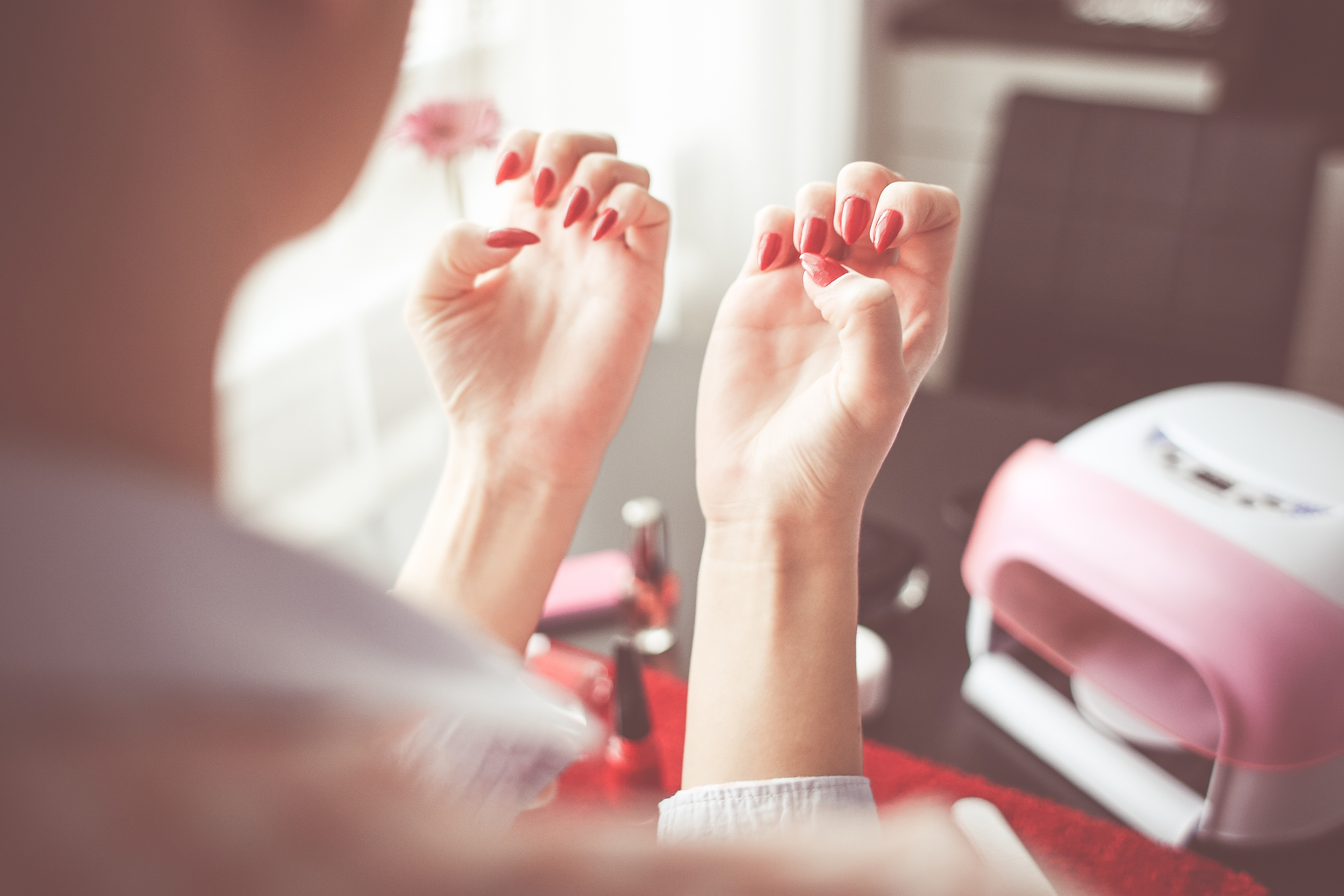
You Shouldn't Feel Bad About Getting Your Nails Done (But That Doesn't Mean You Shouldn't Support Change)

If you haven't read the New York Times series Unvarnished, I highly recommend you do. And if you, like me, immediately feel uncomfortable after reading it, then the following is also something for you. 

If you don't have time for a several series investigate journalism piece, I'll sum it up for you: in New York City, one of the most expensive cities in the world, manicures and pedicures are cheap. Like, dirt cheap. A mani-pedi that might cost me perhaps $50-60 here in Oregon would cost may $20-30. Yeah, that's a big difference, especially considering that the cost of living in Oregon is staggeringly cheaper than New York City. 

Want to know the big reason nail services are so cheap in New York City? Surprise! It's because it's essentially slave labor! 

And it's probably not just in New York City, too. Several large chains are being investigated, which means that mall-based salons throughout the country are going to be under a microscope for their labor procedures. 

The main problem is that many of the manicurists working in New York City are here illegally; they don't speak much English; and they are desperate. The primarily groups are Korean, Chinese, and Vietnamese workers, as well as some Spanish workers and other Asian minorities. 

There are lots of horrible stories in the first part of Unvarnished. You read about a woman charged $270 (more than her average paycheck) for accidentally dripping nail polish remover on a New York woman's sandal, and then being fired; she concludes with, "I am worth less than a shoe." You read about a woman paying $200 to start working in a nail salon--common practice, a fee for "training"--and then working for three months without being paid. When she is finally told she will be paid, she finds out her daily wage is less than $3. There are more stories: tips are skimmed or stolen by the owners, women go months without being paid or are charged for supplies and services they use in their work. Some women hand their entire paychecks over for childcare. Women suffer miscarriages from the fumes or get sick. 

It's devastating. The entire series so far is devastating. 

And if you enjoy manicures and pedicures, it can start to eat at you.

I occasionally get pedicures at a salon in my hometown. It is very small and owned by a Vietnamese family; the manager is their son, who has a degree in mathematics. The workers all seem to be family. They are friendly and seem very happy. I tip well when I go there and chat with them. If they happened to accidentally spill nail polish or drip remover on my shoe, I wouldn't freak out; accidents happen. 

The responses to Unvarnished vary. Lots of women feel guilty. And lots of others get mad about why anyone thinks it is ok to get a pedicure or manicure. "Doesn't it just stink of servitude to begin with??" one comment says.  The answer is, no, not really. It's like any other salon service, like getting your hair cut or colored. Yeah, you could do it yourself; but it's nice to occasionally have someone else do it. 

As long as they're paid accordingly, of course. 

The issue at play here is this: The minute we read about something horrible happening, it's a natural human instinct to think (or potentially say), "but how does this effect  ME???" 

The answer is: it doesn't. This issue doesn't really touch you, unless you are one of the hundreds of manicurists working slave wages. You can't think of this issue in terms of you and your feelings and your guilt. You have to think of it in terms of: What can I do to ensure it improves? 

Already, New York City has taken steps to make changes to their salons. There will be sweeps of all nail salons in the city. That's a big first step. If you truly want things to change, you shouldn't focus on what you feel about it; instead, you should make steps to ensure public policy change. Ask at salons you visit, write your senators and governor, sign petitions. Do something.

You don't have to stop getting manicures or pedicures, especially if you like them. You should support measures that would protect salon workers and ensure them fair wages and safe working conditions (including further testing on the chemicals used during acrylic manicures and their long-term health effects). You shouldn't be paralyzed by your own guilt, but you also shouldn't ignore the issue. 

7 Reasons You Should Take the Trip You've Been Thinking About

1. You can't remember the last time a weekend including something that wasn't errands, cleaning, and/or more of your week time work. 

2. You really, really just want to get out of town. 

3. You found a hotel on TripAdvisor that you just have to visit. It has soaking tubs. Woodsy decor. Eco-friendly mattresses. You read the restaurant menu and rapidly become obsessed with trying green goddess dressing. 

4. You just want to eat, shop, and pretend you have no other responsibilities (such as work, an impending human child, or a house to clean). 

5. It's not really that far away. 

6. You joke to everyone--your coworkers, your husband, your family, your friends--that you "may not come back"! Everyone laughs, but you seriously consider the financial and emotional consequences of raising a child in a hotel. 

7. When you get back, you'll realize how valuable everything you left behind is: work, smelly dog, potentially smelly husband, undone baby nursery, unpaid bills. 

Mothers, Don't Let Your Daughters Make Up Baby Names

This past weekend, I discovered a really funny blog. A woman named Jessie receives a newspeper insert every year that includes the birth announcements for all of Madison County, Idaho. She uses it to create a list of the absolute worst names in Idaho. She's done this for 7 years. She argues (pretty articulately, I must say) and provides evidence that shows that the wacky trend of making up weird names for babies was started in Utah and Idaho; there have been unfortunately named children in these states for decades. 

Before I noticed average everyday people giving their babies truly unfortunate names, I moved to Idaho and found myself surrounded by people with kinda weird names. Unique spellings and interesting pronunciations mostly. It wasn't something I had encountered in Eugene, Oregon. I mean, my graduating high school class was overrun with Michaels, Anthonys, and Christophers. 

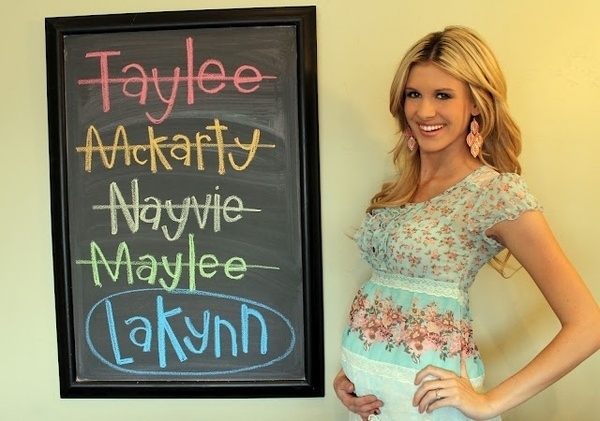
However, in recent years, I've noticed more and more unique names from all corners. People making up names for their kids. I think we've all seen the picture of the pretty pregnant woman standing in front of a chalkboard featuring several very unpleasant names for her future baby... and the truly unfortunate one she decided to go with. In case you haven't, here it is. (You can also find this simply by Googling "white people awful baby names". It's the first result.) 

Let's appreciate for a moment that she didn't name the poor child McKarty. 

Let's appreciate for a moment that she didn't name the poor child McKarty. 

All of these names (and many popular ones) include the Column A and Column B technique: you take a bunch of random prefixes (La-, May-, Mc-, Brin-) in Column A and a random bunch of names or made up names in Column B (-kynn, -lynn, -ley/lee/lei, and more) and just smash then today. Brinley. Brinlynn. Maylynn. Maylei. It ensures that your child will have a truly unique name and no teacher will ever pronounce it correctly. 

As I wrote on Twitter, while reading the blog post I found, "I know you're not supposed to judge other women for what they name their babies, but I'm going to anyway." People will argue that people have the right to name their child whatever they damn well wish and that is certainly true. But a baby isn't an accessory; it isn't a pet; it isn't a toy. It grows up and has its own life. When little Lakynn or little Oakley or little Remington (not kidding) grows up, they have to put down "Lakynn TwilaLou Smith" on their resume, their college applications. If you think that a person's name doesn't affect their job prospects, then you're fooling yourself. 

It's natural to want to give teeny weeny widdle babies teeny weeny widdle names that are as cute and fat and special as them. But that's an impulse that needs to be shoved down. There are home videos of me as a baby with my parents and siblings calling me Michelle, which is 1) bizarre because my memory only recalls being called Shelly and 2) is a mouthful for a tiny baby. But while Michelle or Alexander or Jonathan are big names for little babies, they are also adult names that suggest adult people. 

In the future, we're going to have generations of people with far out names: the Brinleys and Oakleys and Remingtons and Diezzels and Lakynns and McKartys are going to grow up and apply for college. A generation of little girls are doomed to having people stare at their names in disbelief. "Are these just a bunch of letters smushed together? Did you name yourself?" Will the President of the United States ever be named RyKer or Londyn or Lexxus or Kenlee? Probably not. 

I have a penchant for weird, old names. I really like the way they sound and look, and I love when names have a history. However, I've been talked out of Angus and Ezra as boy names because, well, they're just too odd. (I will argue that a man named Angus is probably destined to be a badass. Just saying.) I find myself scaling back the "weirdness" on the names I pick for future baby because, well, I want it to have absolutely every opportunity. I don't want any decision I make to negatively impact its future. And that includes its name. 

I guess what I'm saying is: this trend seems to treat babies too much as fashion accessories that you can name however you want without consequences. But there are consequences to names. Really. Babies grow up into adults and they don't really get a second chance at having a name. A little girl named Remington will be named Remington for her entire life. Do you really want to do that to a child? Don't make up names for your baby. Stick to the classics. 

Does Everyone Think I'm Lazy? (& Other Questions I Ask Myself)

A year ago, I could have read a variety of opinions on pregnancy and dismissed them as a) just jerks or b) valid, if somewhat stupid. But it took reading a variety of comments on a maternity leave blog post to make me realize that some people really do believe that pregnant women are lazy liars who lie and act like special snowflakes. 

The world definitely feels divided into two camps: those who worship pregnancy and act like it's the be-all-end-all of a woman's life; and those who think that pregnancy is the least important thing the world and that pregnant women are just lazy, excuse-makers. 

News flash: neither one of these opinions are very good. 

I read a lot of articles about women in business. Like, a lot. Last week, I read an interview with a woman (who'd been the CEO of a major company) who admitted to believing women who were pregnant or mothers were lazier than other employees.

No dancing around it--that's what she believed. She routinely scheduled last minute meetings at 4:30pm and wondered why female employees with children always said they couldn't make them (were they lazy? Definitely, she believed). She hated that they left at 5pm on the dot. She hated that they didn't go to after work drinks or make the attempt to socialize. She resented them. In an interview once, she didn't stand up for a female interviewee as her male coworker berated the interviewee for having children. She turned down a collaboration with Time magazine because her contact with them had "too many photos" of her kids in her cubicle so she assumed the contact at Time would be flaky. Yeah, she assumed a high-powered exec at Time freaking magazine would be flaky because she had too many pictures of her kids. We won't even get into how she treated pregnant employees: while it is illegal to fire pregnant women, she made it clear she wished she could have. 

This all changed when, surprise, she herself had a child later in life. She realized that mothers couldn't make 4:30pm meetings because they had to pick up their kids from daycare; she realized that was the same reason they were "lazy" and never stayed past 5pm or met up with coworkers for drinkers. She also realized that while they left at 5pm on the dot, they also showed up at 7:30 or 8:00 (about two or three hours before she showed up for the day) and had been working consistently while she enjoyed a workout and coffee. She realized she'd held a lot of really stupid opinions about women and mothers. 

This isn't a topic I really thought about before I got pregnant. I genuinely didn't pay attention to what happened to women with children. I casually avoided those articles about "leaning in" and "having it all." It just wasn't an interest of mine. 

But in the last month, I've found myself thinking more and more about it. I can't brush off negative opinions about pregnant women or mothers anymore because I realize more and more this is how people may begin to see me.  

While reading another article on maternity leave, there were comments that talked about how some people find pregnancy "creepy" or "gross" (ok, fair enough, it's kind of weird). There were also comments that talked about the selfishness and laziness of pregnant women. While I hoped these comments would be singular, I was surprised to see tons of people replying in agreement: that, yes, pregnant women and mothers are obviously lazy and think they are special. 

I always wonder if people like that are projecting. Are they themselves bad at their jobs? Do they wish they could be lazy? Do they want to be the center of attention? Who knows. All I know is: they got on the internet and decided to say pregnant women are lazy and tons of people agreed

This made me ask: do people totally think I'm being lazy?

There seems to be the common thought that women who are pregnant (or mothers) just need to "buck up and get to work" and not complain. The fact is, that probably won't be able to happen. Every pregnancy is different, but depending on the individual they might not be physically able to "buck u[ and get to work." If someone is throwing up until 11am everyday, they won't be able to go to work until then. If someone is so tired they fall asleep at 6pm everyday, they probably aren't going to be able to work past 4 or 5pm. Despite what many people think, growing a human being is pretty tiring. 

That doesn't mean pregnant women should get whatever they want. That certainly isn't the case. I still drag myself to work--even when I feel pukey or tired or whatever--and try my hardest to get my work done. However, there are days when I say screw it and take a few hours break or work from home or whatever. That's just the way it is. C'est la vie. Does that make me lazy? Maybe. Could I totally work through it? Probably. But would I be miserable? Yeah.

Maybe that all makes me lazy--and maybe people will judge me for it--but at the end of the day, I think we can all agree: anyone who judges women on their pregnancy or their position as a mother is probably a huge jerk. 

My Writing Routine

Do you ever wonder what other people do at work? When they get in, what's the first thing they do? 

I spend so much of my time writing -- and thinking about writing, and researching writing -- that writing dominates my thought process and my routine at work. But when it comes to other writing, what's the routine? When I'm not checking my email, researching, or writing work-related material, what do I do with my writing life? 

I research (a lot) & make lists (a lot). 

About 65% of writing for me is researching & planning. I have successfully kept notebooks since my freshman year of college and while I haven't been as organized about it as I wish I was, I still have a vast amount of information I've collected throughout my life. Lists of quotes, ideas, stories, authors, books I want to read... I've written down basically every idea and thought I've had since 2007 and that's pretty awesome. 

It's something I still try to do today. I read; I research; I make lists. These things inform my writing in ways that are obvious and not-so-obvious. 

The Little Things

I write best under very specific circumstances. Early mornings where I have the house to myself. A cup of coffee. A candle. My notebook. My favorite pen. And good music and/or a good movie. I can write for hours like this. 

My house also has to be clean. Before I can write, before I can really get any work done, my house has to be in order -- at least the part of the house I'm in (whether that's my office or my kitchen working area). That usually means I organize and tidy up my desk area, wipe down the counters, clean the floors, and set up some flowers or a candle. I just like a cozy, clean vibe before I can get down to work. 

I mean, why work in a messy place when I can work in a clean place? Plus, less cluttered surroundings leads to less cluttered thoughts. 

Actually Writing 

When I actually get down to writing -- and I mean, really writing -- I lose track of time; I can't pay attention to anything else. All noises blend into one that lulls me into my task. My notes are there only to glance at and perhaps add to or reference, but I don't spend more than 30 seconds looking at them at a time. 

Writing is an all-consuming task that can either be immediately time consuming or can be like picking pills off a sweater (that is, dull, useless, and painful). Everyone has their own unique writing routine -- things they like to have, things they have to do before they can write -- but this is mine. And it's worked so far.