Writing

"Thug Kitchen": Is it Racist or Harmless?

I like Thug Kitchen.

I've followed their Instagram account for ever, allowing the account to be in my peripheral vision for at least a year. That being said, I never paid much attention to it. I didn't cook any of the recipes (I am not vegan; I am allergic to soy; I really hate quinoa), but I enjoyed the tone.

And I'll be honest, I thought the account was run by perhaps a middle class, or upper middle class, black man or woman. I liked the idea of it; I liked the subversion; I liked that it appealed to everybody, but was clearly written in a satirical way. But, like I said, I didn't pay much attention to it and if I had, I would be one of the people who would now be writing sentences like, No one is shocked that Thug Kitchen is written by white people. I'm not one of those people though, which makes the revelation a little more complicated for me. 

More than anything, with the publication of the Thug Kitchen book, the problematic use of the word "thug" by two upper middle class white people comes under fire. When it was just an Instagram account or a Tumblr, we could forget it or look past it. But now, we have to look at it on book shelves, leering at us from stands just inside bookstores. Here's what Jordan Sargent at Gawker had to say about the publisher's somewhat condescending response to concerns from the public: 

"But where Power is wrong is in ascribing that dissonance as purposeful. As has been pointed out in basically every piece criticizing Thug Kitchen, the word "thug" is in the title so that you think of a mean, scary black person. Thug Kitchen uses "thug" the same way as Michael Dunn, who shot an unarmed black teenager for playing rap music too loudly. That the voice of Thug Kitchen doesn't match the character they aim to evoke does not exactly absolve them of their intentions."

Basically: Thug Kitchen is written in a way for you to imagine a black rapper - not a white person, not anybody, but specifically a black rapper. It's AAVE appropriation at it's finest and most icky. 


And yet, I find myself uncomfortable with writing that last sentence. 

Sometimes I wonder if reacting to all these tiny instances of insensitivity, of dubious understand, we are hurting larger efforts. By being persnickety and constantly talking about the little hurts, are we undermining social justice as a whole? 

I like Thug Kitchen, but I also found it pretty boring sometimes. How funny is one person talking about chickpeas or cold brew coffee, in with an affectation? I don't think it is sustainable, for now or for the future, but it was a funny joke while it lasted. 

We're all nervous about admitting to prejudice. But, as I learned in sociology classes in college, there are greys to racism -- it isn't always a clear cut issue. You can be prejudice, but non-discriminatory. I always say, If people admit their prejudice, then at least they can work against it. Realizing you've been badly influenced by a racist social system and working to correct your own thinking is better than being ignorant and racist, right? 

Which brings me back to Thug Kitchen: is my hesitance to declare Thug Kitchen damaging my own form of racism? 


It's ok to like things. 

That's what I tell my husband sometimes: it's ok to like things, to laugh at jokes, to like immature, stupid, silly stuff. 

It's ok to like Thug Kitchen. Really, it is.  Is the use of the word "thug" problematic in a lot of ways? Yes.  But will Thug Kitchen destroy anyone's life? No. However, will Thug Kitchen perpetuate a stereotype that could potentially be harmful to someone? Kind of.

In many ways, l like that Thug Kitchen takes a stereotype and flips it on its head: the thug who eats vegan, the thug who cooks, the thug who talks trash and is super healthy. At the same time, it does perpetuate the connection between thug and a specific speech pattern, thug and a slightly violent overtone. That's concerning for anyone who wants to see equality and less hate speech and stereotyping in general. 

I feel like with things like this it's a matter of give-and-take. Am I disappointed that Thug Kitchen is written by two white people -- and not the person I thought it was? Yes. (And I'm in the minority here -- apparently, I'm clueless.) Does that concern me? A little bit.

But was I ever going to buy this book anyway? No, I don't like most vegan foods and I'm allergic to soy. 
I Love Gillian Flynn's "Sharp Objects" & You Should Too

gillianflynn.jpg

"There is something deeply unhealthy about this book; it's in the characters, in the story, in the relationships, in the sex, and just in the general mood of the novel." - Goodreads Reviewer

"From the first page, I felt the author had just finished a Chuck Palahniuk novel and decided she wanted to be like him when she grew up. Sentence fragments can be fun if you're in the mood for things like 'A belly. A smell. He was suddenly standing next to me.' (Not exact quotes, but pretty close.)" - A Goodreads Review

Harsh words, right? Don't worry, I saved the harshest review for last: 

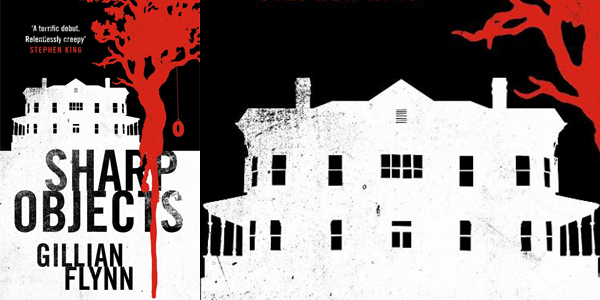
"The razor blade on the front cover of the book is what one yearns for right after embarking on this read, sharp blade with which to cut every single page, one by one, until they are so neatly shredded that even the memory of what was written on them becomes non existent. And then, one can use the same razor to end one's own life.  I'm still unsure what the author was thinking when she began this book, unless she had some very deep and very disturbing mental issues to work through. This book is dangerous and not because it excites one with a thrilling and suspenseful story. It is dangerous because once one reads it, one loses any desire to look for another book that may restore one's faith in the existence of good books with an uplifting charge. Not only is this book dangerous, but it is sick. Its underlying sickness is that it's emotionally draining and unless readers are looking to load up on more mental baggage (I can't think of anyone who doesn't have enough), I'd stay away from its pain." 

Gillian Flynn, for the past few years, has gotten a fair amount of attention for Gone Girl, a stunning novel about a husband and wife -- and how easy it can be for some people to hide their true selves. A lot of people don't realize she has other novels, too. 

I like crime novels. I have always liked crime novels, suspense stories, horror stories. I read a lot of Stephen King (even though I find his books maddening). Good crime novels are hard to find these days, too often falling into the trap of a singular portrayal (white male cop, period) and specific crimes (drugs, gangs, the mob). I was excited to find Gillian Flynn: she is a woman writing mainstream crime novels with female main characters. 

I liked Gone Girl. I didn't love it, but I liked it. I was mostly stunned by it; I wanted to absorb Flynn's writing style and talent (a common feeling when I read a book I really like). The twist wasn't much of a twist; I had guessed it mostly from the beginning.

This is true of all of Flynn's novels: you're going to know about the twist early on because, well, it's obvious. That seems to be the crux of most amateur reviews: I saw it coming or I wasn't surprised

I liked Gone Girl, but I loved Dark Places, another of Flynn's novels about a girl whose family was famously murdered in a Satanic ritual (or so she thinks, announces the voice over in the theatrical trailer). I loved that the main character, Libby, was as deeply unlikable as Amy from Gone Girl, but for entirely different reasons. She is a lazy, manipulative, kleptomaniac obsessed with being the saddest story, constantly mourning not really her family anymore, but herself. It's a brilliant book.

Then I read Sharp Objects.

I spent a lot of time thinking about Sharp Objects. It revolves around a journalist named Camille, who returns to her hometown to cover the murder of one preteen girl and the disappearance of another (potentially related). She is still dealing with a lot of personal pain and the return home isn't really what she needed to recover.

As the quoted reviews point out, this is a book -- a town, a main character, a family -- that is diseased. It's sick. This is a sour spot for a large number of readers, it seems. If you're someone who doesn't enjoy reading about the twisted psyche of a small town, then this isn't a book for you. Part of me believes that you need to come from a small town to understand the claustrophobia and sickness of a small town like the one in the book. 


In my senior year of college, I wrote a poem that included this line: 

Cottage Grove is a town that mopes like a man. 

I come from a small town. Cottage Grove, Oregon, to be exact, a town known for having the largest number of covered bridges in a 5 mile radius of town. The Covered Bridge tour is a draw and now, so are the vineyards, all lying about 10-15 miles west of town -- but people have to pass through from I-5 to get to them. The town is not prosperous; with the recession, sawmills and logging operations closed down and left a lot of people poverty-stricken. My mother grew up knowing everyone in town, but now we don't know anybody. I see a lot of dirty kids. A lot of trash in the river. There is a man who walks the streets of our 3-block downtown screaming to himself. 

Cottage Grove is like so many small towns: dirty, old, obsessed with itself and its false pride, poor. Cottage Grove is like Wind Gap, MO in Sharp Objects: a town with a cruelty that is kept very, very secret. Like most small towns. 

I think to understand Sharp Objects, you have to understand the claustrophobia and fear of small towns, the way it's so easy for small towns to fall into mass hysteria and panic. If you don't, the novel only seems sick, purposefully painful, writhing in its own sadness. 


I love Sharp Objects

I love the sticky, moist writing, so reminiscent of warm, Midwestern towns in the summer. I love the unconventional main character and I love her personal issues. I love how deeply I identify with them and yet, how deeply I want to understand them because they are so foreign. I love the mother, Adora, because she reminds me of older women I know. I love that it is a book that made me feel uncomfortable, but drew me in. 

I loved that it was a crime novel that wasn't about a cop. I loved that I know who the killer was (or who I thought the killer was) from the very beginning. I love that the big twist takes place in about 1 page of text. I love that the prose feels dirty, the way it is supposed to, the way it should with such a sick story. 

Sharp Objects isn't a book for everybody, but it is a book that should not be dismissed. The writing is beautiful; the story is magnetic. It's a better book than Gone Girl. Don't believe me? Read it for yourself. 

Creative Writing & Finding a Path

I used to think I needed to be very good at everything -- and yet, only dedicate myself to one thing. 

I really thought I was most valuable if I dedicated myself whole-heartedly to one passion. If I could make that work, I would be happy, I was sure. 

By the time I was halfway through college, however, I realized there was no way I could dedicate myself to one thing for the rest of my life. It just wasn't possible. 

I want to say something braggy here, such as, I was just good at too many things, but that isn't true. The fact is: I'm flighty. I get obsessed very easily -- and fall out of obsessions very easily too. I'm a trivia based person. I can remember random facts better than I can remember anything else. 

I would get frustrated with myself when I couldn't focus on something wholeheartedly. I would get frustrated when I just started to get good at something and lose interest. 

It took me a long time to realize that the reason I enjoyed writing so much was because it allowed me to be interested in everything.

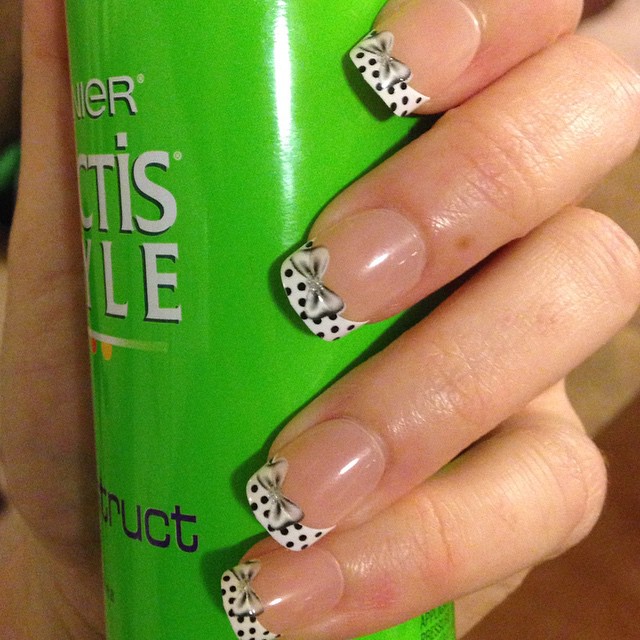
polkadotnails.jpg

I could learn about history, nail art, music history, and the life cycle of stars all in one day -- and informed my writing more than anything else. You can't write without research. And research is, honestly, what I love the most because I love immersing myself in a variety of topics for a short amount of time. 

Finding my path took a long time. I felt like I could never fully indulge in my hobbies -- like fashion or nails or fandom -- because I was too busy trying to be serious about one thing.

I love being a writer because in one day, I can research anything that sparks my interest. I don't have to feel like I'm only able to learn about certain things or be passionate certain things. 

Big Decisions (and Other Regrets)

blogpost1

I've been writing for a long time.

For as long as I can remember, really, I've been writing. I always felt like I was born to be a writer. But just because I knew exactly what I wanted to do didn't mean it was easy.

I took a lot of missteps. I wandered down a lot of paths.

It's only been recently that I've found where I really want to be. Finding this new place -- where I'm happy and content -- means that I have to look at the things I was doing before and decide if that's how I want to spend my time.

This is a long drawn out goodbye to my blogs of the past. 

It's difficult to look forward and think, no more narcissistic outfit posts. No self-involved beauty posts. (OK, maybe sometimes -- and I'll never stop writing about my favorite beauty products.) That's been the content I've produced non-stop since 2008 and it's hard to imagine a world where I don't write at least two or three reviews a week! 

I'm excited to move on though. I'm excited to have a more solid grounding in my career. 

The Uses of Sorrow
(In my sleep I dreamed this poem)
Someone I loved once gave me
a box full of darkness.

It took me years to understand
that this, too, was a gift.
-Mary Oliver

That doesn't mean I'm not sad -- in a lot of ways, I am. I thought I'd blog forever. I thought I'd write about the same things and always be happy about it. But that just isn't the way it happened. Life is more complicated than that and we're always finding new things about ourselves we want to explore, new things to write about. I want to have the freedom to do just that -- with a look that's a little more professional.

More than anything, I knew it was time for me to grow up. 

Saying goodbye to a blog that I've essentially kept since 2008 (longer than I've kept anything in my life) means saying goodbye to a part of my identity that I truly outgrew a long time ago -- but held onto because I loved it so much. My blog is representative of who I was at one of the happiest and saddest times of my life. Moving on is moving on -- letting go of the sadness, of the wanting to go back in time, of dwelling on the past. 

I'm excited for this new chapter. Stay tuned for more.