5 Tips for Writing Every Day

Writing every day doesn't really seem like a challenge, does it? Not until you actually make a goal to sit down and do it. 

For 2017, I set a goal to write 600,000 words in a year. That's a lot of words. And it requires me to basically write one NaNoWriMo every month. Looking at it that way, it's incredibly overwhelming. Even breaking it down into 10,000 word short stories, I still have to write five of them. 

Why did I do this to myself again?

However, as of Saturday, I am at 22,000 words for January. That's considerably more than I thought I would have by now, thanks to rewriting and editing portions of short stories to post on Wattpad

I thought I'd share what has worked for me to help me get to writing every day (or, at least a few days a week). 

1. Set a routine. 

The most important thing for writing, for me, is to have a routine. As an example, I write most of my blog posts on Saturday and Sunday mornings; if I don't have my week scheduled out by then, most likely, it's not going to happen. (Prime example, this post was supposed to go out last Friday.) I tend to write more in the evenings as well--especially after 6 or 7pm. (This may be because that's when my son goes to bed!) 

2. Make yourself accountable. 

Accountability is a big thing. If you want to write 1,000 words a day, you need to hold yourself to it: no procrastinating, no getting out of it. Be accountable for how much you're writing and notice the patterns that form when you decide not to. 

That all being said, accountability means more than just making yourself write. It means being kind to yourself. Having a hard time? Not enjoying the story you're writing? Then, why do it? Seriously. If you hate it, fix it. If you need to take a day off, take a day off--but be ready to jump right back into it. 

3. If you don't feel like writing, editing is a good fall back option. 

There have been a few days (probably half of January, actually) where I just didn't want to write. So I worked on editing and rewriting portions of my NaNoWriMo novel! Writing from scratch is a mentally exhausting activity. So when in doubt, I work on editing something I've been working on for a while; it still accomplishes the task of "writing," but without the mental fatigue. 

4. Start as many works as you need to. 

Right now, I have about five short stories I'm working on. That seems like a lot, right? But I find that I need variety when it comes to writing. Also, I always get a really good idea once I'm running out of mental steam for what I'm working on. (Sort of like during NaNoWriMo, I always get about 100 better ideas for novels...) I let myself start a new story--or a new outline, if that's what I want to do--in the middle of working on something else, if only for the fact that it helps me actually get to writing. 

5. Tell your friends. 

Tell your friends, or your family, or your dog, that you want to write more. Ask them to talk to you about it. If you don't have friends or family that you want to talk to about writing (trust me, I understand), tell Twitter! Or Instagram! Writing communities on social media can be some of the most supportive, amazing communities out there. Community support will help you achieve your goal, because nothing is better than support. 

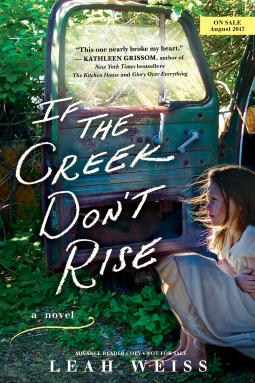
Book Review: "Four of a Kind," by Kellie Sheridan

I started this book fully prepared to dislike it. Between the cover and the description, it seemed like a lot of Bad Waiting to Happen. However, I was pleasantly surprised. Which just goes to show, you can't judge a book by its cover. 

Disclaimer: A received a copy for an honest review from NetGalley. Also, this review does contain spoilers. 

Yes, there is a little bit that could do to be changed. Mainly, the quads' R-names really should have been rethought; I still can't 100% tell the difference between Reilly and Reece. Realistically, new parents of identical quadruplet girls would not name all of them incredibly similar sounding names: Reilly, Reece, Reagan, and Rhiannon. That was the first unbelievable hurdle to jump over (never mind the statistical possibility of identical quadruplets, all of whom are perfectly fine with no lasting difficulties from, I don't know, sharing a womb). 

Another difficulty was the fact that occasionally, the book does veer into sounding just a little too try hard, including the moments when Reagan seems to slip into seeming, well, too much like a narrator. I think that's one of the biggest downsides of the book; occasionally, Reagan will think something that is so incredibly not something a teenager would think about themselves (such as "Curse my teenage hormones!" What teenager says that!?) that it takes you out of the moment entirely. Basically, Reagan's internal dialogue often did not feel natural or normal, probably because of editing.  

The one thing I will say is that it felt like the book ended just a little too abruptly. It was quite a short book; I read it in a total of perhaps 4 hours. It felt like towards the middle a lot of random "drama" happened, such as Reece dyeing her hair and Rhiannon disappearing. Regarding that second incident, I think Reagan's non-anger at Rhiannon was the most disappointing part of the book; talk about being untrue to teenagers! Rhiannon's behavior lead to Reagan having to abandon her first ever date--what a dick move for her sister to pull. It was an incredibly important moment for Reagan and actually felt like the climax of the novel: Reagan, who is shy and nerdy, is on a date with a guy she really likes. That's the ultimate end-game for Reagan, what her narration has been about essentially since the beginning. And instead of anything happening, the moment is ruined, about 5 minutes in, by her sister's disappearance. And we're supposed to believe that Reagan isn't mad?  

Any teenager, or adult, honestly, would be livid, but Reagan was just "too good" for that. It's those moments where she slips (alongside her parents and sisters) into being just a little "too perfect," just a little idealized. I wanted some messiness from Reagan, but it didn't happen. There were a few moments like this where the reactions of characters seemed to be just too fake and unrealistic. No one, absolutely no one, reacts to teenagers breaking rules with, "Well, maybe we need to readjust the rules." No, if my kid disappeared and turned off her phone, she'd be getting grounded until summer at the very least. But not Rhiannon's parents!

Then, after Rhiannon came back and Reagan got to do a date re-do, the book ends. We get a brief scene where Reagan acts in a play, but that's it. It's a bit anticlimactic; there is no big action that creates tension or changes things. Things seem... the same as when the book started, plus a boyfriend. Maybe Rhiannon's disappearance is meant to be the climax, but it didn't feel like it; Reagan found her within 10 minutes of starting to look, so, you know. 

All this being said, it wasn't an entirely unpleasant book to read; I would definitely recommend it as the start of a series to younger readers (I'd say it's definitely written at around 6th or 7th grade level).

A few additional notes: this book does win points for attempting to include a diverse cast. Based on descriptions, Reagan's love interest, Kurt, appears to be biracial (it's never explicitly stated) and one of the quadruplets (Reilly) identifies as gay. These are just two examples. It is always difficult to praise diversity in a book that centers around four, beautiful, identical, white girls, but alas, I have to give Kellie Sheridan credit for at least including diverse characters, even if they are secondary in this novel. (From my understanding, this is the first in a series about the quadruplets. Here's to hoping for more in the sequels!) 

How Intuitive Eating Changed My Life

A few months ago, I started listening to a new podcast called Food Psych, hosted by Christy Harrison, a certified Intuitive Eating Counselor as well as a Registered Dietician Nutritionist. I had heard of intuitive eating before (although it hadn't been called that) through Geneen Roth's books, but I had never actually tried to put it into practice. 

I am nothing if not a victim of diet culture; I have been thinking about diets, and shaming myself for eating, for as long as I can remember. I still remember the vivid horror I felt, at 9 years old, that my thighs were bigger than my best friend's and how I needed to fix it immediately

For years, I've known that my eating behavior was not normal or healthy. I fixated on food at all times: worrying about it, wanting it, dreading it. I never really knew when I was hungry; I ate when I was expected to, then I ate out of stress, boredom, or feeling nothing. I read an article recently called Hunger Makes Me (that I highly, highly recommend) and I never identified more with a passage of writing than this one: 

I will rely on any other cue—the ease or difficulty of procuring food, the time of day, what other people are doing, the timing of my work and gym and social plans—before I’ll remember to look inward. Imagine being told that your biggest secret—your weirdest sexual fantasy, your most embarrassing faceplant, your favorite Nickelback song—was supposed to dictate your behavior, publicly, as many as three times a day.

When I started listening to Food Psych, something clicked inside of me. 

All these things we view as healthy--going low carb or no carb, posting on fitness Instagrams, taking diet advice from uneducated strangers on the internet, signing up for Weight Watchers--are killing us. Diets, I've since learned, only increase your chances of gaining weight. A study of diabetes patients found that the group that was instructed to diet actually ended up in worse health than the control group that maintained an "overweight" status. 

Here's the thing: weight doesn't determine your health. You're just as likely to get diabetes if you're fit and healthy as if you're overweight. If your reaction to reading that sentence is "No, I've learned diabetes is a fat person disease!", then congratulations, you got played by the diet industry. We are seeing just as high of numbers of diabetes diagnoses in fit, healthy people as overweight people, leading us to believe that diabetes is more genetic than we have previously believed. 

That's just one example. There are many. 

Beyond that, diet culture confuses us about what we feel: we eat what we've planned, when we're supposed to, versus eating what our body craves when it is actually hungry. When you get rid of "taboo foods," when you allow yourself to eat a cookie when you're hungry and want a cookie, but also allow yourself to eat a salad when you're hungry and your body craves a salad, then you are letting your body lead you. The arbitrary lines of "good" and "bad" foods cause us to obsess over them. 

This is all damaging behavior. I know it is, because I'm living it and it's damaging me, mentally and physically. 

I started reading a book called The Intuitive Eating Workbook (I'm still working through it, but will review it soon) that walks the reader through the 10 principles of intuitive eating. It's hard work and I won't pretend I'm perfect at it already. It's hard to get rid of everything I've ever known in terms of "healthy" food and "healthy" bodies. But opening myself up to body positivity and health at every size, I can only see my mental health improving. 

The hardest part of practicing intuitive eating is telling others around you to stop talking about their diets, to stop talking about dieting around you in general. I find (and really, have always found) that diet talk triggers my anxiety eating, but after starting to practice intuitive eating, it's even worse. The moment someone starts talking about never eating cookies again, or giving up cake or bread for life, I start to doubt what I'm doing. I start to wonder if maybe intuitive eating is wrong and all these diets are right. Certainly, all those fitness Instagrams seem happy...

The truth is though that I can't imagine a life where I permanently give up a bad food. I would never be happy never eating cake with my son or baking cookies with him just to eat the dough. That's just not a life worth living, nor is it sustainable--because eventually you'll be confronted by your "off limits" food. It's not a matter of having self-control. It's a matter of listening to your body and allowing yourself to eat. 

But I still struggle with telling others that I cannot listen to diet talk. I still struggle with confronting the beliefs other people still hold about diet culture (and who believe I should be actively dieting). I still struggle with health anxiety that I'm giving myself diabetes or going to die early for no reason. 

It all takes work. But I can tell you: intuitive eating, truly, changed my life. 

5 Tropes Romance Novels Need to Drop

I love romance novels. I never thought I would write that phrase, because I used to hate them--but I don't anymore. Romance novels can be fun, little escapes that are nothing more than pure fun. Nothing serious happens. The heroine always gets the guy. It's all great. 

But the more romance novels I read, the more I realize: some of these tropes are just plain bad... but also so sickeningly common. It feels so easy for romance novels to keep writing the same formulaic story over and over and over... and over... and over... again, for years! It's easy to forget that times outside of the story have changed. 

So here are 5 tropes that romance novels seriously need to drop. If you're a romance writer, avoid these things like the plague. 

1. The controlling, alpha male lead with a tragic past. 

This tragic past conveniently always allows the heroine to forgive him for his downright shitty, abusive behavior. I recently read a romance novel (that I reviewed, rather unkindly, on Goodreads) that featured a romantic lead that was just plain abusive. He was mean; he refused to let the heroine eat if she showed up to dinner late (!!); and he treated her like trash. But when she found out his tragic story, she instantly forgave him. Oh no, no. That's not how life works. Let's drop these male lead characters, shall we? I'm only here for romances that feature diverse, compassionate, kind romantic leads from now on. 

2. The delicate, tiny, virginal heroine, also with a tragic past. 

The heroine in romance novels is always described a very specific way: she is slim, she is tiny, she is long-legged, she is either blonde or has "honey-colored" brown hair (she's never dark-haired, or dark-skinned, or short, or on the plump side). She is also a doormat, universally, with a tragic past that she hasn't received therapy for, but has moved on from pretty quickly. She's also always, always virginal. I'm over it. I'm done. Give me diverse, dynamic, powerful lead, please. 

3. The appropriation of other cultures. 

If I had a nickel for every time a female lead in a romance novel donned the traditional dress of another culture and "pulled it off," I'd have more nickels that I knew what to do with. Can we just drop this trope immediately? If you're lead is a white woman, please don't let her put on a headdress for Coachella, a Cheongsam for a fancy party, or anything else. She can wear a gown or some denim shorts like everyone else. 

4. The insta-love storylines. 

"He touched my hand and it burned through my body." I'm sorry, I know this is fantasy, but no. That's not how it happens. I want storylines where they are "meh" about each other for a while, or where they become friends first and then fall in love. I want storylines that are more about building something, rather than finding something already built and just stepping into it. Less insta-love, more actual romance. 

5. Everyone is rich (everyone).

50 Shades of Grey did the world many disservices, but the number one disservice is introducing the world to the idea that, oh yeah, everyone in a novel can be billionaires! A novel I read recently featured a rich ranch owner who took in a... secretly rich girl who was also a ranch owner. It removes any requirements of plot from the author; when your characters don't have to worry about money, they can spend all their time focusing on the romantic lead. That's boring. I need drama! Less billionaires, please. 

My Readings List [+ Where to Get Free Books!]

I love to read. Between October and December 31, I read 53 books. You read that right: 53 books in 3 months--that's about 17 books a month, that's 4 books a week. If a book sits still long enough, I'll probably read it, even if I have no interest in it. I'm just that kind of person. I'm just that kind of reader. 

On my iPhone, I keep a Note with a list of the books I'm due to read: books I've downloaded from Amazon, books I've bought, or books I plan to review. I thought I'd share my reading list because it will keep me accountable (I really need to stop downloading more books...) and because I'm always a little nosy about what other people are reading. 

Here's my list: 

  • A Magical Highland Solstice, by Mary Morgan
  • Highland Spy, by Madeline Martin
  • All the Dead Girls,  by Rita Herron
  • Highland Vixen, by Mary Wine
  • The Weatherhouse, by Nan Shepherd
  • Meet Me at Willoughby Close, by Kate Hewitt
  • The Sheriff's Mail Order Bride, by Ann B. Harrison
  • The Montana Bride, by Jeannie Watt
  • The Trail of Ted Bundy, by Kevin Sullivan
  • The Other One, by Jiffy Kate
  • The Intuitive Eating Workbook, by Evelyn Tribole and Elyse Resch
  • The Goblin Child, by Michael Forester

In case you were wondering: yes, that is quite a lot of books and yes, I am a bit overwhelmed as I've fallen desperately behind on my reading list! 

I'm always on the hunt for affordable (or even free) books to read while I'm between books. If you're like me and you can read a book in a day easily, then you can end up spending a lot of money on books--or just going without, which isn't the ideal situation! I can't afford to buy 53 books in 3 months, that's for sure. Here are my favorite ways to get affordable, or even free, books. 

1. The Library, of course (or library loan programs!)

If you use an ereader (like me) and have a library card (which I don't because I live outside city limits), you can often borrow library ebooks for free through your library's website. If you need help, you can ask a librarian and they can explain it all. (Also, ask for their recommendations because librarians have the best taste in books!)  

2. NetGalley

NetGalley is a website where you can sign up and receive ebooks (via your Kindle or just as a PDF download) to read in exchange for a review. You can review them on NetGalley, on your blog, or on Goodreads (preferably all three). Since signing up a few weeks ago, I've read tons of books and written lots of reviews; some of them are great, some of them are not-so-great, but it's a good opportunities for those looking to start reviewing. Or who just love to read and review books! 

3. Amazon Prime Reading

If you have Amazon Prime, they now have a program called Prime Reading, where you can download books for free to read. I love this program because I've found some new authors that I love (like Emma Prince) and fully plan to buy all their books! 

4. Kindle Unlimited

If you don't have Amazon Prime, but do have a Kindle reader, I highly recommend Kindle Unlimited. I've read some amazing series through Kindle Unlimited. It's $10.99 per month and you can borrow up to 10 books at a time. Kindle Unlimited has helped me discover some books that I absolutely love, as well as some authors that I cannot get enough of. When I find a book I like, I always buy the next book in the series, even if it's on Kindle Unlimited. 

On Setting Goals for 2017 + Free Printable!

I've written briefly before about how I set goals for myself. It's kind of a process, but it's one that I think works really well if you, like me, get a little overwhelmed by goals in the first place. I find breaking down my goals into manageable, easy pieces to be the best way to, you know, convince myself to actually work on it! 

Step 1: Decide what I want to accomplish (aka, what's my goal really?) 

The first thing you need to decide is what you want you goal to be. In my example, what I want to accomplish is to finish Couch to 5K. That's a solid goal, except that it's maybe just a little too specific. Ultimately, my goal is to start running consistently in January. It's not as set-in-stone as specifically finishing a program. 

Step 2: What 3 things can I do to accomplish this goal? 

Once I have my goal in mind, I set myself to setting three deliberate tasks that I can focus on to accomplish this goal. It would be so easy if I could say, I want to run consistently this month; but there is so much else going on. In my example, my three things would be to set aside time every evening where my husband watches Forrest & I go running; prepping meals in advance to cut down on cooking time at dinner; and washing all my work out gear to ensure I'm ready to run. 

Step 3: What 3 things might hinder my progress? 

When I'm setting goals, I know things are going to hold me back. It's best to have an eye on those things before you get too far into a goal. In my example, three things that might hinder my progress are getting hurt, not eating enough calories (and therefore being too tired to run), and the weather (I refuse to run in the rain or if it's gotten too dark). 

Step 4: Set weekly tasks

Sometimes, when trying to accomplish something like running consistently (or cleaning my house, etc.), it's easier for me to break it down into smaller tasks or goals. In my example, my first weeks tasks might be to meal plan for the next month & prep small items (like portioning chicken and vegetables); and my second week tasks might be something like altering my routine to create more time for myself in the evenings. Basically, set a goal and then build up to that goal with smaller, more manageable tasks. 

Step 5: Write it all down

Listen, no one can remember everything. I'm a big fan of keeping calendars and checklists for myself. That's why I created the goal-setting printable for you to download! Just click the button below to check it out. 

How to Beat the January Slump

In my most recent newsletter (remember, you can sign up here!), I wrote about the January Slump. I've often said that January (and furthermore, February) is my least favorite month. The reasons can be summed up in this: The holidays are over, the weather is usually atrocious, and it feels like it will be forever before spring arrives. 

I suffer from SAD (Seasonal Affective Disorder, or seasonal depression) every year. It doesn't matter that I'm not a huge fan of the sun or of summer in general; I still end up deficient of vitamin D and hating the winter months because of it. The January Slump is just another building block of "ugh" on top of that already pre-existing weirdness. 

I want to share my tips for beating the January Slump. I'm not an expert, by any means, but these are things I do to try and take care of myself whenever January rolls around. 

1. Practice self-care. 

Self-care doesn't have to be what it is often advertised as (bubble baths, binge watching TV shows, eating your favorite food); it's incredibly personal. Self-care, for me, is as simple as reading a book, learning a new hobby (I've taken up cross stitch recently), or lying in bed listening to music. I love these tips from Sarah at Lavender Life as well

2. Use a Happy Lamp. 

I've said it before and I'll say it again: buying a Happy Lamp was the best decision I ever made in my entire life. What is a Happy Lamp? It's a lamp that mimics the sun, basically. So if you live in a place (like me) where we have nearly 100% cloud cover from November through May, you miss out on a lot of sunlight--which helps your body produce vitamin D, which helps you have energy and reduce the chance of depression. Yeah, a Happy Lamp is... amazing. You can buy one here. I keep mine on my desk (definitely not Instagram worthy!) and turn it on whenever I'm writing, reading, or just sitting around. 

3. Exercise. 

As I said in my newsletter, recommending exercise is always opening a can of worms. Some people just aren't capable of exercise: it takes up time they don't have or they're dealing with physical issues that prevent exercise. I totally get it. For the past year, I just haven't had time to exercise in the strictest sense of the word. I also just didn't have the motivation. But now that Forrest is older, we can take walks in the park and I don't have to worry about him getting too cold. You don't have to run a marathon or take up bodybuilding; adding in a few walks a day, jogging up a flight of stairs, doing an exercise video in the evening... little things can raise your endorphins and help you feel less depressed and more motivated. 

4. Focus on your goals. 

Have you set any serious goals for 2017? When things are getting hard (the weather is bad, the month just won't end, you're still recovering from December splurges, etc.), focus on what you want to achieve. Set small, manageable tasks for yourself so you can get through the month. Even if those tasks are things like "I'll dress nice for work every day this week" or "I'll cook myself a nice supper instead of eating a packet of saltines and a banana." 

Click here to sign up for my newsletter!

My New Year's Resolutions

I told myself, about a month ago, that I wouldn't be setting any New Year's Resolutions. 

However, as January 1 gets closer and closer, I find myself getting that familiar feeling. I want to set goals. I want to try to do things that are tangible and measurable. 

Sometimes, I think people get caught up in the word "resolution." All resolution means is "the firm decision to do or not do something." It doesn't mean to make a vast, sweeping change to your life. It doesn't mean anything different than a goal or a desire. 

So, my advice to others is: set the same goals for yourself for 2017 that you would for a month, or a week, or whatever. Then build on them. 

These are my goals for 2017. 

1. Write 600,000 words.

This is my biggest goal. I want to write 600,000 words in 2017--and my blog posts, my daily writing at work, and my journals don't count. I want to write 600,000 creative words. Words that are for me, as a writer. This divvies up to 50,000 words a month. A NaNoWriMo every month. 

Also included in this will be editing & rewriting my NaNoWriMo novel--and potentially previous years NaNoWriMo novels. 

2. Support more bloggers & writers. 

My newsletter is a big part of that. I want to give a platform to other creatives who are just doing what they do: running Esty shops, writing, creating content, whatever. 

3. Be brave & stand up for myself more. 

I had an experience two weeks ago where I felt more empowered than ever to stand up for myself and take charge. It was terrifying, but exhilarating. I loved every second of it. Usually, I'm the type of person who rolls over, who apologizes, who lets other people make the decisions. But not anymore. I'm done. I'm over it! 

4. Practice intuitive eating. 

The best thing I did for myself in 2016 was starting to listen to Food Psych, a podcast about eating disorders and intuitive eating. It really, truly changed my life. If you're a podcast listening, it's a must-hear, especially if you've ever had issues surrounding food, anxiety, and body image. Since then, I've been tiptoeing around intuitive eating, trying to implement it but still preoccupied with using it purely to lose weight; in 2017, I want to take bigger steps towards freeing myself from restrictive eating and embracing food.